
Magnesium Glycinate

MINERAL SUPPLEMENT

MAGNESIUM
GLYCINATE

Magnesium glycinate is magnesium bound to the amino acid glycine. It is commonly used to increase magnesium intake and is particularly popular for sleep and relaxation, although research specifically on the glycinate form is still relatively limited.
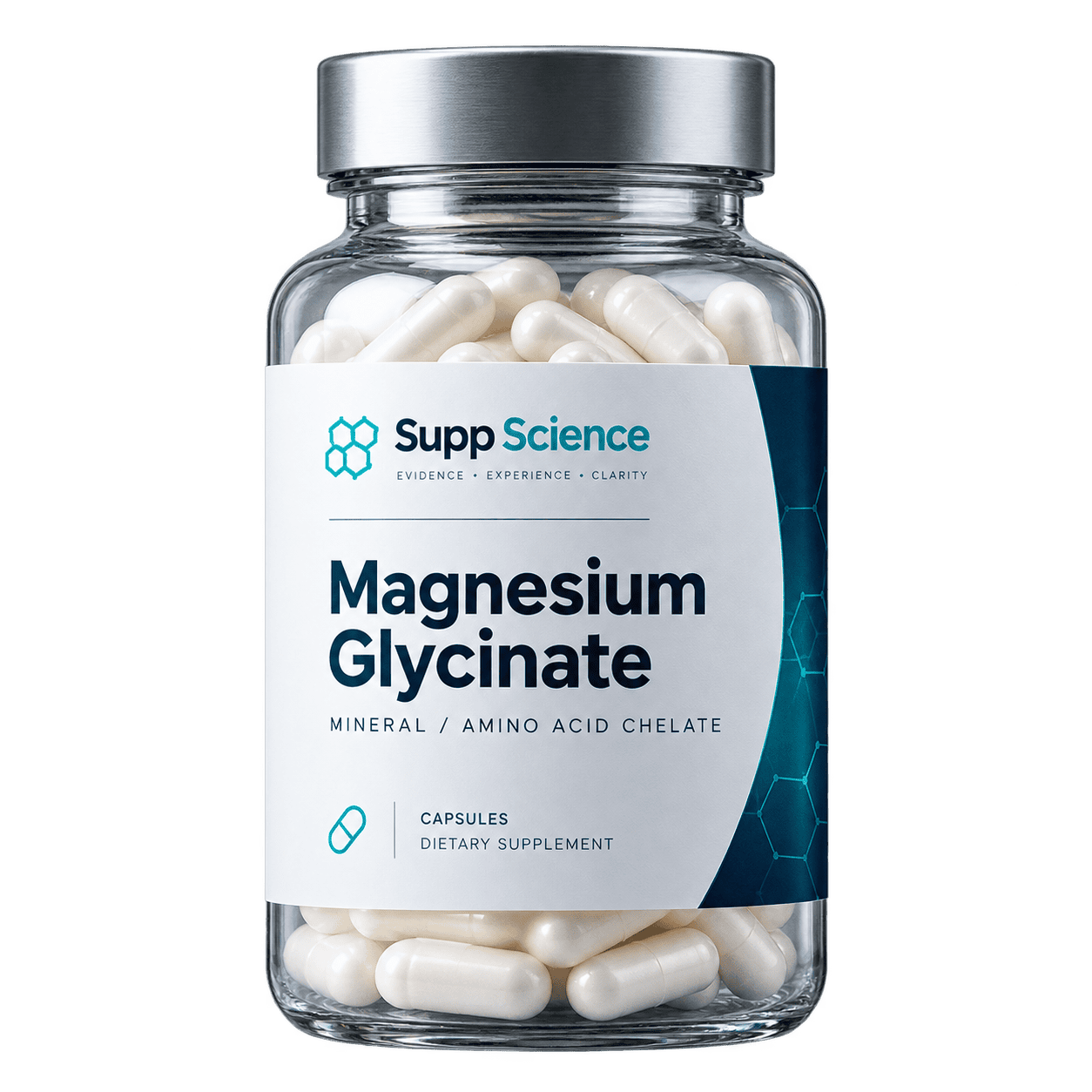
Supp Science Magnesium Glycinate supplement

MAGNESIUM GLYCINATE — QUICK SUMMARY

Type Chelated magnesium
Status Dietary supplement
Common Uses Magnesium intake, sleep & relaxation
Mechanism Supplies elemental magnesium
Administration Oral
Evidence Limited form-specific human evidence
01

What is Magnesium Glycinate?

Magnesium glycinate is a supplement form in which magnesium is bound to glycine, an amino acid. It is also commonly called magnesium bisglycinate because magnesium can be bound to two glycine molecules to form the chelated compound.

The magnesium itself is an essential mineral used throughout the body. It is involved in normal nerve and muscle function, energy production, blood glucose regulation, blood pressure and the formation of proteins, bone and DNA.

People often choose magnesium glycinate when increasing their magnesium intake, and it has become particularly popular in products marketed around sleep and relaxation. It is important, however, to separate what is known about magnesium generally from what has been demonstrated specifically with the glycinate form.

Direct human research on magnesium bisglycinate is still relatively limited. In a recent placebo-controlled trial involving 155 adults with poor sleep, 250 mg of elemental magnesium per day from magnesium bisglycinate produced a small improvement in insomnia severity over four weeks compared with placebo.

Relaxed evening routine representing sleep and relaxation
Key distinction

Look at the amount of elemental magnesium, not simply the total weight of magnesium glycinate. Supplement labels report the actual magnesium supplied separately from the larger magnesium-glycine compound it is attached to.

02

Community Discussion

See what the Supp Science community is discussing about Magnesium Glycinate.

COMING SOON

Magnesium Glycinate discussions are on the way

Community threads and discussions about Magnesium Glycinate will appear here as they are added to Supp Science.

03

Independent Testing

Independent laboratory results for Magnesium Glycinate commissioned by Supp Science.

NO RESULTS YET

No independent tests yet

We don't currently have an independent laboratory result for Magnesium Glycinate commissioned by Supp Science. You can request testing and we'll consider it for a future testing round.

Request Testing →
04

Real Experiences

See how Magnesium Glycinate performs in the real world, through the experiences of people who have actually used it.

SUPP SCIENCE REVIEW PROGRAM

Take Part in a Supp Science Review

Apply to take part in a structured product review. Selected participants receive the product free, with their experience and results documented from start to finish.

Apply for a Review →

Community Experiences

Search real experiences in people's own words.

No experiences found for this search.
i
Anecdotal experiences

These are individual user reports collected from third-party sources. They are presented as experiences rather than proof of cause and effect. Use the original-source link to read the surrounding discussion and context.

05

Magnesium Glycinate Research & Evidence

What human research tells us about sleep, relaxation and the other reasons people commonly use magnesium glycinate.

Sleep

Sleep is one of the main reasons people choose magnesium glycinate, and there is now direct human research using the bisglycinate form.

In a 2025 placebo-controlled trial, 155 adults aged 18–65 with poor sleep were given either magnesium bisglycinate providing 250 mg of elemental magnesium per day or placebo for four weeks.

Insomnia Severity Index scores fell by 3.9 points with magnesium versus 2.3 points with placebo. The difference was statistically significant, but the effect size was small.

The study also suggested people with lower magnesium intake beforehand may have responded better, although that finding was exploratory rather than definitive.

Magnesium Status Matters

Magnesium is essential for normal nerve and muscle function, energy production, blood glucose regulation and hundreds of enzyme reactions throughout the body.

That makes correcting a genuine magnesium shortfall very different from giving extra magnesium to someone whose intake and status are already adequate.

This distinction appears in clinical research too. In the magnesium bisglycinate sleep trial, the people reporting lower baseline dietary magnesium intake appeared to show larger improvements.

It may help explain why real-world responses to magnesium supplements can differ considerably between people.

~

Stress & Anxiety

Magnesium is often promoted for feeling calmer, but the clinical evidence is much less straightforward than the marketing suggests.

A systematic review identified 18 human studies examining magnesium and subjective anxiety. Some studies reported improvement, particularly in people already vulnerable to anxiety, but study quality and methods varied considerably.

A newer review of magnesium interventions for anxiety and sleep also found potentially useful signals, while concluding that the evidence remains too inconsistent for strong conclusions.

Importantly, most of this research studied magnesium generally, not magnesium glycinate specifically.

Muscle Cramps

Magnesium plays a real biological role in normal muscle function, which is why supplements are commonly associated with cramps. That does not mean supplementation reliably prevents ordinary muscle cramps.

A Cochrane review identified 7 randomised trials involving more than 400 participants. In people with ordinary idiopathic cramps, mostly older adults with night cramps, magnesium did not produce a meaningful reduction in cramp frequency compared with placebo.

Magnesium deficiency itself can cause cramps, so treating a deficiency and giving extra magnesium to someone who is already sufficient are separate questions.

Blood Pressure

Magnesium has also been studied extensively for blood pressure, although this evidence is about magnesium supplementation generally rather than the glycinate form.

A 2025 meta-analysis combined 38 randomised controlled trials involving 2,709 people. Across the trials, magnesium reduced systolic blood pressure by about 2.8 mmHg and diastolic pressure by about 2.1 mmHg compared with control.

Larger reductions were seen in people with hypertension or low magnesium status, while people with normal blood pressure did not show a statistically significant reduction.

Does the Glycinate Form Matter?

Magnesium glycinate is magnesium attached to glycine. The form is popular because it is commonly described as well tolerated and suitable for evening use.

But there is a much larger evidence base for magnesium supplementation in general than there is for magnesium glycinate itself.

The 2025 sleep study provides useful direct evidence for magnesium bisglycinate, but findings from magnesium citrate, chloride, oxide or other forms should not automatically be presented as proof that glycinate produces the same result.

For most claimed benefits, the evidence currently supports magnesium more strongly than it supports one specific form.

Evidence strength

Magnesium itself has a substantial human evidence base and a well-established role as an essential mineral. Evidence specifically for magnesium glycinate is much smaller. A recent controlled trial found a modest improvement in insomnia symptoms with magnesium bisglycinate, while many other commonly claimed benefits rely on research using magnesium in other forms.

06

Magnesium Glycinate Questions & Answers

There is some direct evidence, but the effect seen so far is modest rather than dramatic.

In a placebo-controlled study of 155 adults with poor sleep, four weeks of magnesium bisglycinate providing 250 mg of elemental magnesium per day improved insomnia scores slightly more than placebo. The measured effect size was small.

Broader research on other forms of magnesium has produced mixed results, so magnesium glycinate should not be treated as an established insomnia treatment.

Was this helpful?

There isn't strong human evidence showing magnesium glycinate is universally the best form.

Different magnesium compounds contain different amounts of elemental magnesium and can differ in absorption and digestive effects. Glycinate is popular because it is commonly considered relatively easy on the stomach, but many health outcomes have been studied using other magnesium forms.

The best evidence therefore depends on what outcome you are actually looking at rather than one form being superior for everything.

Was this helpful?

Elemental magnesium is the actual amount of magnesium supplied by the supplement.

Magnesium glycinate weighs more because the magnesium is chemically attached to glycine. So a capsule may contain a much larger total weight of magnesium glycinate while providing a smaller amount of actual magnesium.

When comparing products or interpreting research, the elemental magnesium figure is usually the useful number.

Was this helpful?

Individual responses vary, and not everyone experiences the calming or sleep-related effect often associated with magnesium glycinate.

Real-world reports include people describing daytime drowsiness, digestive symptoms and, less intuitively, worse sleep or increased alertness. Anecdotal reports cannot establish why this happens.

Clinical studies also show that average benefits are relatively small, so it should not be assumed that every person will notice the same effect.

Was this helpful?

Magnesium deficiency can cause muscle cramps, so restoring low magnesium is biologically relevant.

But trials of magnesium supplements in people with ordinary idiopathic muscle cramps have generally not shown a meaningful reduction in cramp frequency compared with placebo.

That research also involved magnesium in different forms, so it does not establish a special anti-cramp effect for glycinate.

Was this helpful?

Mostly magnesium generally.

There are decades of human studies examining magnesium supplementation, but those trials use several different forms. Direct clinical evidence specifically involving magnesium glycinate or bisglycinate is much smaller.

That's why Supp Science separates evidence for the mineral itself from evidence showing that the glycinate form has a particular advantage.

Was this helpful?
?
HAVE A QUESTION?

Ask the Supp Science Team

Can't find what you're looking for? Send us your question and we'll look into it.

Ask a Question →
07

Medical Literature

Relevant human research on magnesium glycinate and magnesium supplementation, summarised in plain English.

RANDOMISED CONTROLLED TRIAL 2025

Magnesium Bisglycinate Supplementation in Healthy Adults Reporting Poor Sleep

This double-blind trial included 155 adults aged 18–65 who reported poor sleep. Participants received magnesium bisglycinate providing 250 mg elemental magnesium daily or placebo for four weeks.

Insomnia scores improved by 3.9 points with magnesium and 2.3 points with placebo. The difference reached statistical significance, but the measured effect size was small (Cohen's d = 0.2).

View Study →
META-ANALYSIS OF RCTS 2025

Magnesium Supplementation and Blood Pressure

Researchers combined 38 randomised trials involving 2,709 participants. The median magnesium dose was 365 mg per day and the median study duration was 12 weeks.

Magnesium reduced systolic blood pressure by about 2.8 mmHg and diastolic pressure by about 2.1 mmHg. Larger changes appeared in people with hypertension or low magnesium status.

View Study →
SYSTEMATIC REVIEW 2024

Supplemental Magnesium for Anxiety and Sleep Quality

This systematic review examined clinical intervention studies involving magnesium for anxiety and sleep — two of the most common reasons magnesium supplements are promoted online.

The review found potentially useful signals, but substantial variation between studies in participants, formulations and outcomes made strong conclusions difficult.

View Study →
SYSTEMATIC REVIEW 2023

The Role of Magnesium in Sleep Health

Nine human studies involving a combined 7,582 people were reviewed. Observational studies commonly linked better magnesium status with better sleep characteristics.

Randomised trials were less consistent, leaving the authors unable to conclude that magnesium supplementation reliably improves sleep disorders.

View Study →
SYSTEMATIC REVIEW & META-ANALYSIS 2021

Oral Magnesium for Insomnia in Older Adults

This analysis identified 3 randomised controlled trials involving 151 older adults with insomnia.

Across the pooled trials, people receiving magnesium fell asleep approximately 17 minutes faster than those receiving placebo. The underlying evidence was limited by the small number and quality of the studies.

View Study →
SYSTEMATIC REVIEW 2017

Magnesium Supplementation, Anxiety and Stress

Researchers reviewed 18 human studies involving people vulnerable to anxiety, including mildly anxious participants, people with PMS and people with hypertension.

Some studies reported improvements, but the review concluded that the evidence was suggestive rather than definitive because study quality was generally poor and methods varied considerably.

View Study →
RANDOMISED CLINICAL TRIAL 2017

Magnesium Supplementation for Mild-to-Moderate Depression

This trial involved 126 adults with mild-to-moderate depressive symptoms. Participants received magnesium chloride providing 248 mg elemental magnesium per day during the active treatment period.

Symptoms improved during magnesium treatment. This is relevant to the broader magnesium evidence base, but the study used magnesium chloride rather than magnesium glycinate.

View Study →
COCHRANE REVIEW 2012

Magnesium for Skeletal Muscle Cramps

Seven randomised trials were identified. In people with ordinary idiopathic cramps — largely older adults with night cramps — magnesium did not meaningfully reduce cramp frequency compared with placebo.

This is an important counterpoint to the widespread assumption that taking extra magnesium automatically prevents muscle cramps.

View Study →
i
Reading the evidence

Magnesium has been studied extensively in humans, but magnesium glycinate specifically has not. The 2025 bisglycinate sleep trial provides useful form-specific evidence; most research on anxiety, blood pressure, cramps, mood and older sleep studies used other forms of magnesium. Those studies tell us about magnesium, but cannot automatically establish a unique benefit of glycinate.