
RETATRUTIDE
Retatrutide is an investigational once-weekly peptide that targets three hormone pathways involved in appetite, blood glucose regulation and energy balance: GIP, GLP-1 and glucagon. It has produced some of the largest average weight reductions yet reported in obesity trials, but it remains unapproved in Australia.
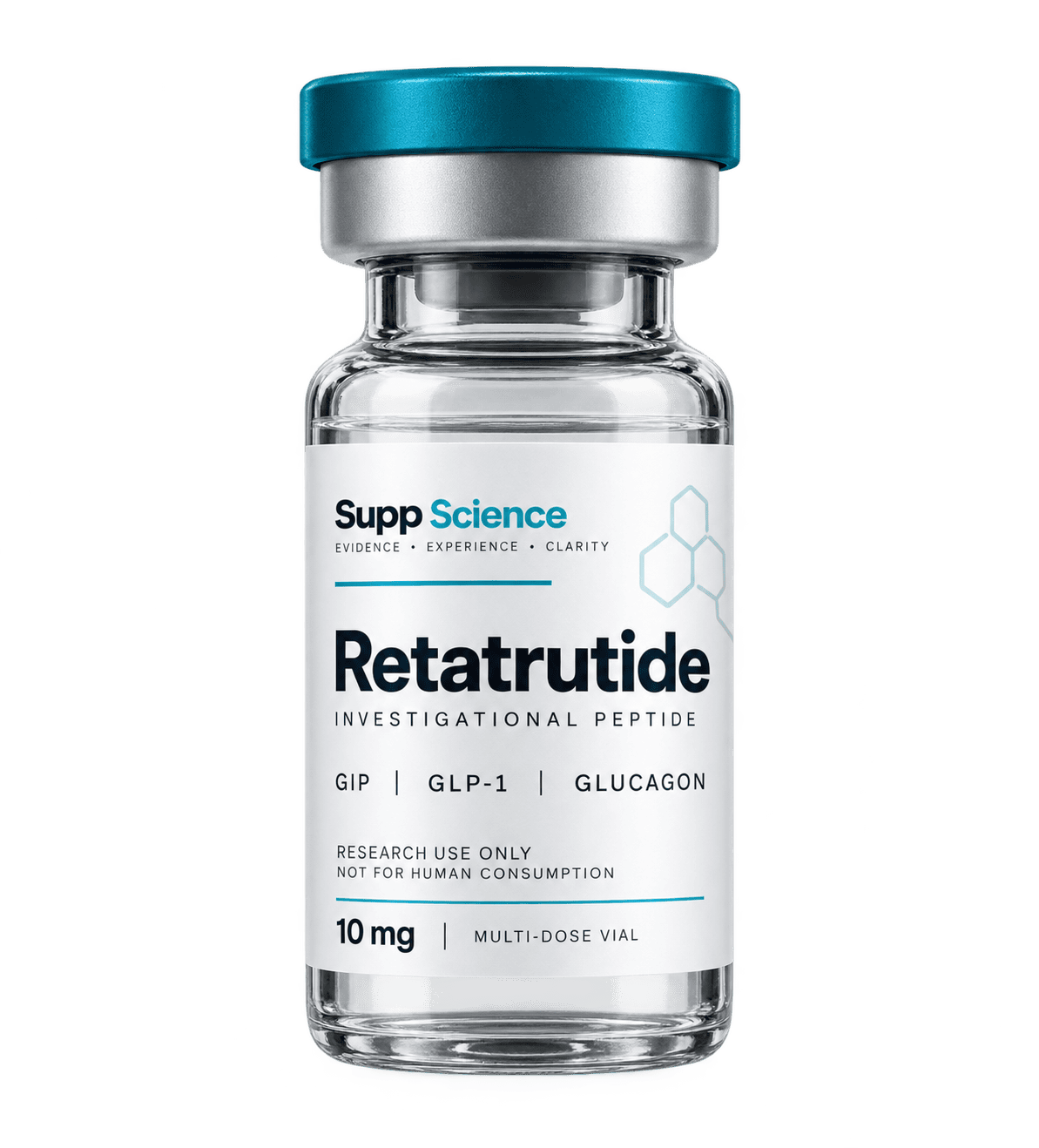
RETATRUTIDE — QUICK SUMMARY
What is Retatrutide?
Retatrutide is an investigational peptide being developed primarily for obesity and related metabolic conditions. It is designed to activate three hormone receptors at the same time: GIP, GLP-1 and glucagon.
GLP-1 and GIP are hormones released after eating and help regulate appetite, insulin secretion and how the body handles nutrients. Glucagon has a different role and can influence how stored energy is released and used. Retatrutide combines activity at all three pathways in a single molecule.
The main reason retatrutide has attracted so much attention is the amount of weight loss seen in human trials. In a peer-reviewed Phase 2 study involving 338 adults with obesity or overweight, participants assigned to the 12 mg target dose lost an average of 24.2% of their body weight over 48 weeks, compared with 2.1% with placebo.
Phase 3 results have since reported even larger reductions. In TRIUMPH-1, participants receiving 12 mg retatrutide lost an average of 28.3% of their starting body weight over 80 weeks. The average starting weight was about 112.7 kg, which corresponds to roughly 31.9 kg at the group average. Retatrutide is still investigational and is not currently an approved therapeutic product in Australia.

Retatrutide is not simply another GLP-1 drug. Semaglutide targets GLP-1, while tirzepatide targets GLP-1 and GIP. Retatrutide adds a third target — the glucagon receptor — which is the defining feature of its triple-agonist design.
Community Discussion
See what the Supp Science community is discussing about Retatrutide.
Retatrutide discussions are on the way
Community threads and discussions about Retatrutide will appear here as they are added to Supp Science.