Product Overview: What is Cialis Daily (Tadalafil) and How Does it Work?
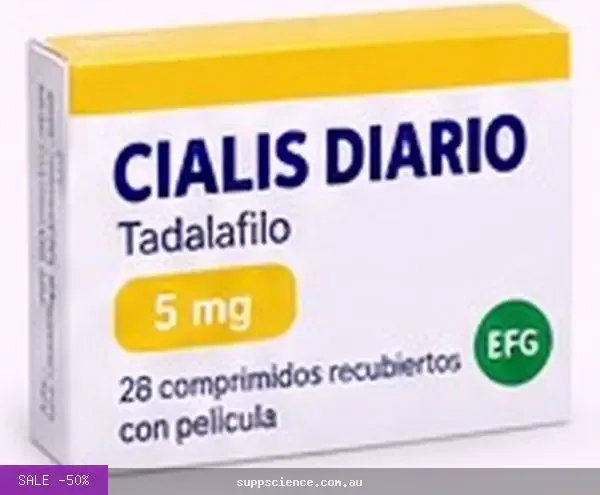
Cialis Daily, known generically as Tadalafil, is a widely prescribed medication for the ongoing treatment of erectile dysfunction (ED) in adult men. Unlike on-demand treatments taken just before sexual activity, the daily version of Cialis is designed for everyday use, providing continuous management. This approach is particularly suitable for those seeking more spontaneity in their intimate lives, eliminating the need to plan ahead for taking a tablet.
The active ingredient, Tadalafil, belongs to a class of medications known as phosphodiesterase type 5 (PDE5) inhibitors. Its mechanism of action is based on enhancing blood flow to the penis, facilitating the achievement and maintenance of an erection during sexual stimulation. For it to take effect, a certain level of stimulation is still necessary; it is not an aphrodisiac and does not induce an erection in the absence of sexual desire.
Cialis Daily is notable for its particularly long half-life among PDE5 inhibitors, approximately 17 to 20 hours, allowing for prolonged action. Taken in a low dose (commonly 2.5 mg or 5 mg daily), it achieves stable concentrations in the body, thereby maintaining continuous efficacy and reducing the pressure of "timing" while providing more flexibility in sexual life.
The onset time – or the period before the medication becomes active – can vary slightly from one individual to another, but with regular intake over several days, most users experience sustained effects without any sudden spikes or drops in efficacy. Thanks to this pharmacological profile, Cialis Daily seamlessly fits into a morning or evening routine, offering maximum discretion and freeing users from the stress associated with preparing for intimate moments.
Who Typically Chooses Cialis Daily and Who Benefits the Most?
The daily version of Tadalafil is primarily aimed at men who anticipate regular sexual activity or who wish to avoid “scheduling” their treatment and intimate life around an on-demand tablet. This group typically includes those in stable relationships, who prefer spontaneity, or those for whom anticipation creates pressure or anxiety.
Some men find that taking a low daily dose enhances their overall confidence and intimate well-being, as they no longer feel beholden to the timing of the dose or the delay in action before a sexual encounter. This option is also particularly valuable for those looking to avoid the psychological or logistical hassles typically associated with traditional ED management.
Ideal candidates for this type of treatment are men for whom on-demand options have not provided satisfactory results, either due to unwanted side effects from the higher doses necessary with occasional usage or because of inconsistent efficacy (e.g., fluctuations in results). Users of Cialis Daily appreciate that the effect remains stable, without gaps in efficacy or the need for breaks between doses.
It is important to note that Cialis Daily is only recommended for men with a confirmed diagnosis of erectile dysfunction after consultation with a licensed healthcare professional in Australia. Certain medical profiles (such as heart conditions, the concurrent use of specific medications, and a history of severe hypotension) need to be assessed to ensure the safety of Tadalafil treatment.
Finally, individual tolerance plays a significant role in choosing a daily routine. Men who are sensitive to headaches, facial flushing, or have experienced significant side effects with on-demand protocols often find this lower daily dosing an appealing alternative.
Available Dosages, Forms, and Packaging Options
Cialis Daily in Australia is available in two main dosages: 2.5 mg and 5 mg, each providing slightly different efficacy profiles depending on individual need. These dosages are designed for continuous daily intake rather than on-demand use, setting them apart from other Tadalafil strengths (10 mg, 20 mg), which are intended for use as needed.
The tablets are offered in an oral form, coated, and easy to swallow. The 2.5 mg option generally serves as the recommended starting point, especially for those trying the treatment for the first time or for individuals more susceptible to side effects. The 5 mg dose serves as an alternative for men who have not achieved satisfactory efficacy with the 2.5 mg version, while still remaining within a safe range for daily use.
In terms of packaging options, there are packages available for different durations of use and varying budgets. Australian online pharmacies typically offer packs of 28, 56, or 84 tablets, or even more for regular users. This variety accommodates both initial testing and established routines. The per-tablet pricing can significantly decrease based on package size, a consideration for monthly costs and the practicality of managing treatment.
| Dosage |
Form |
Available Packaging |
Target Population |
Indicative Price AU$ |
| 2.5 mg |
Coated tablet |
28, 56, 84 tablets+ |
Beginners, sensitivities, mild-moderate needs |
From 29 AUD (depending on pack) |
| 5 mg |
Coated tablet |
28, 56, 84 tablets+ |
Moderate to intense daily needs |
From 39 AUD (depending on pack) |
Depending on the source (original Cialis brand vs generic Tadalafil), the formulation and bioavailability remain equivalent in compliance with Australian TGA regulations. The choice of dosage and packaging volume should be determined in consultation with your doctor, based on your individual needs, response to the medication, and tolerance.
For those wishing to test their response or establish their tolerance before committing to a monthly or quarterly supply, starting with a smaller pack is advisable. This allows for dosage adjustment over time, assessment of any potential side effects, and optimisation of treatment costs.
How to Take Cialis Daily Correctly: Practical Tips and Interaction Points
Taking Cialis Daily correctly goes beyond just swallowing a tablet each day. Several practices contribute to maximising effectiveness while minimising the risk of side effects. Proper absorption of Tadalafil depends on strict adherence to the prescribed dosage and consistent daily intake. It is not advisable to increase or decrease the dose unexpectedly without prior consultation with your prescriber, even if results are unsatisfactory.
Cialis Daily can be taken at any time of day, with or without food. Many users choose to integrate it into their breakfast or bedtime routine to avoid forgetting doses. Unlike some other PDE5 formulations, its bioavailability is not significantly affected by high-fat food consumption, freeing users from meal timing constraints, which adds to its simplicity.
An important consideration involves interactions with alcohol. Moderate drinking (1 to 2 glasses) typically does not interfere with the effectiveness or safety of Tadalafil. However, excessive alcohol consumption can increase the risk of hypotension and dizziness, or exacerbate erectile dysfunction. During long social occasions, it is wise to be mindful of your own tolerance. For those already taking other medications or with certain health conditions (particularly cardiovascular), it is advisable to discuss this with their prescriber.
Here are some additional tips for optimal use:
- Take your tablet at the same time each day with a glass of water.
- Do not double your dose if you forget; simply resume your normal routine the next day.
- Never combine Cialis Daily with other ED treatments or any medications containing nitrates (commonly prescribed for angina or heart issues).
- If you experience bothersome side effects, promptly contact your healthcare provider.
- If unsure about compatibility with other medications or supplements, seek advice from a healthcare professional in Australia.
Overall, the simplicity of administration and the absence of major dietary restrictions make Cialis Daily a well-regarded choice for a long-term daily routine.
Possible Side Effects and Important Warnings
Like all prescription medications, daily Tadalafil carries a risk of side effects. While most users tolerate the typical low doses used in the daily format (2.5 mg or 5 mg) well, it is crucial to be aware of the most common manifestations and the signs that necessitate discontinuation of treatment.
Common mild side effects reported with daily use include:
- Headaches (mild to moderate, usually transient)
- Facial flushing
- Nasal congestion or stuffiness
- Muscle pain or back pain
- Mild digestive discomfort
Most symptoms tend to diminish or resolve after a few days of regular use, as the body adjusts to the medication. However, it is not uncommon for these effects to persist in some patients, requiring adjustments or discontinuation of the prescription – prompt communication with your doctor is advisable in such cases.
While serious reactions are rare, they can occur and require urgent medical attention. These include:
- Persistent and painful erection (priapism lasting more than 4 hours)
- Chest pain
- Allergic reactions (hives, swelling of the face, difficulty breathing)
- Sudden decrease or loss of vision
- Sudden hearing loss accompanied by tinnitus or dizziness
If you experience any of these symptoms, it's crucial to stop taking the medication immediately and seek emergency medical assistance without delay.
The safety of using Cialis Daily should be reviewed by your prescriber if you are currently taking heart medications (especially nitrates), alpha-blockers for benign prostatic hyperplasia, or if you have severe liver or kidney conditions. Formal contraindications are outlined in the Consumer Medicine Information (CMI) leaflet, in accordance with the Australian Therapeutic Goods Administration (TGA) requirements. This medication is not advisable for anyone under 18 years of age or for women.
If you have any questions or concerns, please reach out to your Australian general practitioner, local pharmacist, or the telemedicine platform that was used for the prescription.
Brand Cialis vs Generic Tadalafil: Pricing, Satisfaction, and Practical Aspects
One of the key considerations when purchasing from a pharmacy, whether in-person or online, is the choice between the original brand – Cialis – and the various approved generic versions of Tadalafil, all regulated by the TGA in Australia. Despite differences in appearance, packaging, and potentially pricing, their pharmacological effectiveness is strictly equivalent at the same dosage.
Significant savings, often amounting to several dozen AUD per month, explain the increasing interest in generic formats, offering no compromise on safety or quality. Generic tablets must adhere to the same composition standards as the original (dosage, purity of Tadalafil, method of administration, and dietary neutrality). They are available through both local pharmacies and registered online platforms, ensuring the same traceability standards and the option for a valid prescription from an Australian doctor.
In terms of pricing, generic Tadalafil often starts from around AUD 0.90 per tablet for bulk orders, with variations based on the dosage and packaging chosen. This more affordable pricing becomes particularly relevant for daily use, as cumulative monthly costs can significantly impact long-term health budgets. The brand Cialis enjoys historical recognition but can frequently be pricier, despite offering objectively the same effectiveness. Some individuals may still prefer the original product due to brand loyalty or the recognizable appearance of the tablet.
Ultimately, the decision between brand and generic is influenced by the perceived cost/reliability ratio, familiarity with the manufacturing lab, and possibly personal preferences regarding the presentation or colour of the tablet (some generics may differ visually from the original without affecting the quality of Tadalafil). Lastly, those covered by private health insurance not on the PBS should check if they are eligible for reimbursement for this treatment or specific products.
The adoption of generics fits perfectly with online shopping: most Australian pharmacies partner with reliable suppliers that are accredited and routinely inspected by the TGA. It is essential to always order from well-known entities that are transparent about the product's nature and medical validation of the prescription.
Ordering, Delivery, and Key Considerations for Choosing an Online Pharmacy
Accessing Cialis Daily through online pharmacies in Australia follows a set of precise rules designed to guarantee safety, confidentiality, and compliance throughout the process. Classified as S4 (prescription-only) by the TGA, this medication is not covered by the PBS (Pharmaceutical Benefits Scheme), meaning the cost is fully borne by the patient. However, this private status allows for a greater choice of providers and price adjustments according to local competition.
Trustworthy platforms require a formal prescription from an Australian doctor for first-time orders, which can be obtained through a secure teleconsultation or by uploading an existing prescription. Some partner pharmacies may initiate a quick contact to validate the treatment, provide advice, or check that no contraindications were disclosed on the order form.
When completing your order, you will have the option of various shipping methods, depending on your location in Sydney, Melbourne, Brisbane, Perth, or other urban or regional areas. The primary delivery options include:
- Australia Post Express Post: Delivery in 1 to 3 business days, with real-time tracking – recommended for greater discretion and speed.
- Australia Post Parcel Post: A cost-effective option with a standard delivery timeframe of 3 to 6 business days.
In all cases, the packaging will be neutral and free of any mention of the contents, ensuring maximum discretion upon receipt. No visible indication on the package refers to the nature of the product or its use, a standard now adopted by the vast majority of Australian pharmacies to maintain confidentiality for "sensitive" purchases.
Payment is made in Australian AUD (AUD), via secure credit card or sometimes other payment methods like bank transfer or digital wallets, depending on the pharmacy's policy. Before making a purchase, take the time to check the site’s ratings (Trustpilot, Google Reviews, local forums) to prioritize the security of your purchase and the effectiveness of customer service for any post-sale needs.
Finally, monthly or quarterly renewals can often be facilitated by an automatic reminder system – a service highly valued by regular users as it reduces the risk of running out and simplifies day-to-day management.
Frequently Asked Questions (FAQ) About Daily Tadalafil in Australia
Ordering and taking Cialis Daily routinely raises a series of legitimate questions. Here’s detailed information to clarify common concerns before, during, or after your purchasing process.
- How long should I wait to see the effects of Cialis Daily?
Tadalafil taken daily is not designed to provide "immediate" effects with the first dose. Generally, it takes around 4 to 5 days (sometimes a full week, depending on individual profiles) to reach a stable concentration in the bloodstream, at which point effectiveness becomes noticeable. If there is insufficient response after 7 days of proper use, do not increase the dose without consulting your doctor for a personalized adjustment, such as considering the 5 mg version.
- Can I take Cialis Daily with other chronic medications?
For most common medications (antihypertensives, antidiabetics, antidepressants, etc.), no significant interactions with daily Tadalafil are documented. However, there are notable exceptions: nitrate derivatives (for angina), certain antihypertensives, or alpha-blocker treatments. It is crucial to inform your prescriber of any medication (including over-the-counter drugs or natural supplements) during your initial pharmacy request or teleconsultation.
- Must the medication be taken strictly at the same time every day?
While it is advisable (but not imperative) to take your tablet at a consistent time each day to maintain a steady presence of Tadalafil in your bloodstream, a slight delay usually doesn't matter. However, consistency significantly enhances effectiveness. If you forget a dose, never take an extra one the following day; just return to your regular schedule to avoid accidental overdosing.
- Is there a risk of developing a tolerance or dependence on Cialis Daily?
PDE5 inhibitors, including Tadalafil, do not lead to tolerance or chemical dependence, even with long-term use. However, the psychological habit of "counting" on a reserve of effectiveness can create some form of behavioural dependence on the treatment device for certain users. This is not a pharmacological mechanism but rather personal comfort generated by a reassuring routine.
- Does taking Cialis Daily affect libido or the quality of orgasm?
Tadalafil does not chemically alter libido or pleasure sensations; it neither "triggers" nor "blocks" sexual desire. Its action facilitates the attainment and maintenance of an erection, which can naturally enhance intimate satisfaction for individuals facing such challenges. Any change in libido as a result of taking the medication is generally psychological, linked to regained confidence or alleviation of concerns about dysfunction.
- Can I order online and receive the medication without revealing the nature of my purchase?
Absolutely. Australian pharmacies authorized to sell Cialis Daily online ensure delivery in completely neutral packaging, with no specific references on the parcel or delivery slip. Whether the delivery is made via Australia Post Express or Parcel Post, the item description never alludes to any product category or medical condition, allowing for complete discretion upon delivery at home, at a collection point, or at the post office.
- Are there any restrictions for ordering Cialis Daily in Australia if I am not a permanent resident?
The medication can be ordered by anyone with a delivery address in Australia and a prescription issued by a local accredited prescriber. For temporary residents (students, expatriates, extended travellers), the prescription must meet national standards – international prescriptions typically aren’t accepted. All online purchases are subject to strict rules imposed by the TGA for S4 classified treatments.
If you have any ongoing questions or specific concerns regarding your purchase, practical arrangements, dosage adjustments, or daily management (such as missed doses or unexpected side effects), it’s always advisable to consult a healthcare professional in Australia. Additionally, reputable platforms typically offer customer service or support to assist you, whether through chat, email, or a dedicated FAQ section.